
Hydroxyproline is one of the main components of Arthred™ hydrolysed collagen and is therefore a good marker whose uptake can be quantified in blood serum (10). The absorption of short-term orally administered hydrolysed collagen was measured by a single supplementation of 10g Arthred™ hydrolysed collagen. When compared to a standard diet control without hydrolysed collagen, supplementation resulted in a significant increase in collagen- characteristic amino acids like hydroxyproline, hydroxylysine, glycine, and proline in blood serum [9] (see below).

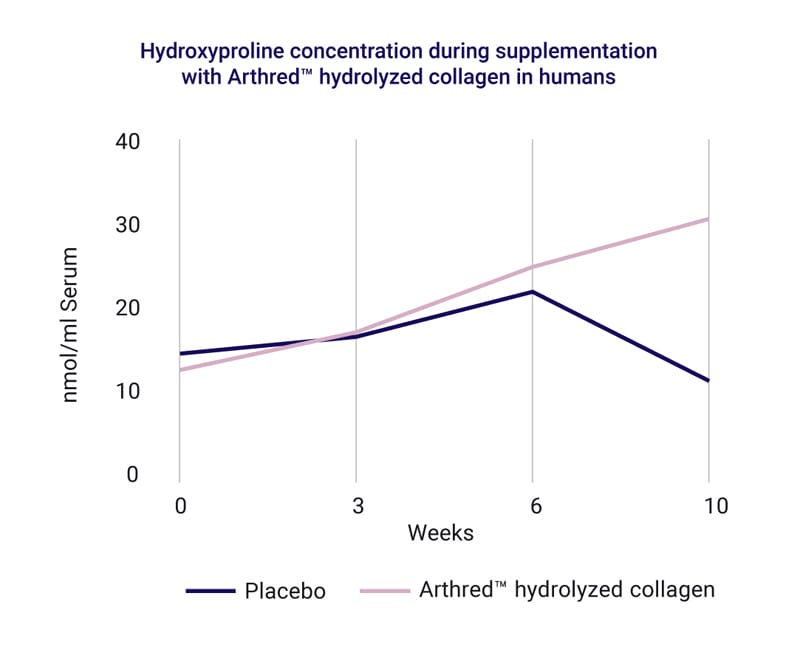
Beuker et al. (1993) conducted a double-blind, placebo-controlled clinical trial involving 52 student athletes (aged 21 to 27 years) to investigate amino acid concentrations in serum following long-term oral administration of Arthred™ hydrolysed collagen or a standard diet without hydrolysed collagen (placebo) during exercise [10]. The athletes performed one hour of physical training three times a week during a period of four months. The collagen-specific amino acid hydroxyproline concentration in plasma was continuously and significantly elevated during supplementation with hydrolysed collagen providing evidence that collagen was absorbed into the bloodstream. The placebo had no effect on hydroxyproline levels in the blood (see above).
Among healthy, competitive Spanish male mountain bikers (n=16) and female basketball players (n=10), Fernandez and Perez (1998) examined the effect of hydrolysed collagen (also called hydrolysed gelatine) on shoulder and knee joints. Subjects consumed hydrolysed collagen (10g/day) enriched with magnesium, vitamins B1, B2, B6 and pantothenic acid for a six-month period [11]. After supplementation, biometric ultrasound values of the cartilage showed statistically significant increases of cartilage thickness in supplemented athletes while control subjects exhibited either no change or decreasing cartilage thickness (see below). This indicates that enriched hydrolysed collagen may help maintain cartilage homeostasis and joint health among athletes whose joints have been stressed through competitive athletic performance.
